

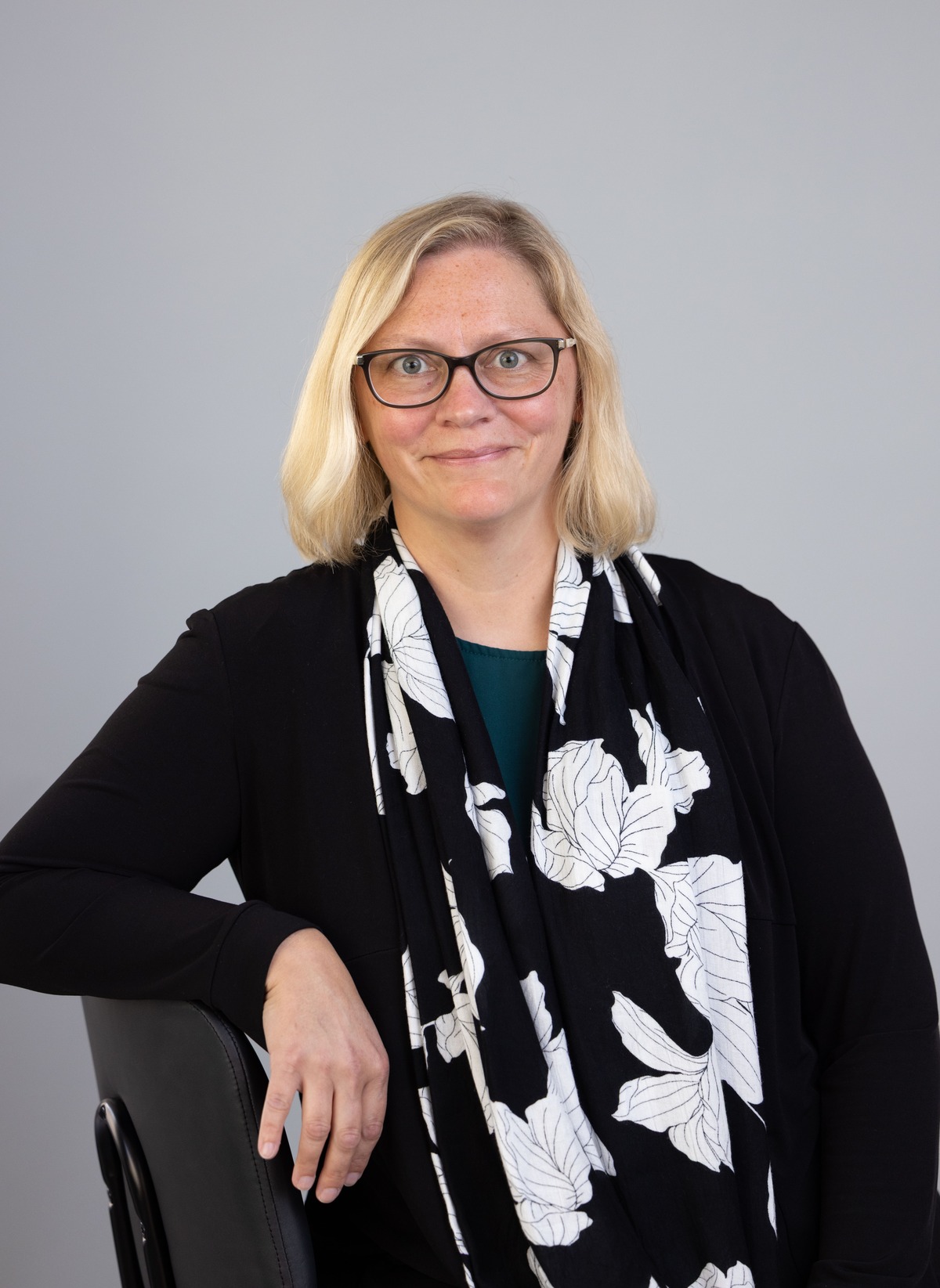
Christine Parthemore, Head of Biodefense.
I’ve joined Radical Numerics because I believe we are entering one of the most consequential periods in the history of biotechnology. The people building the next generation of AI-powered biological tools have an extraordinary opportunity to shape a safer future.
AI and biology are advancing together at remarkable speed. Researchers are using AI to analyze existing medicines for new applications, develop new medical countermeasures, automate increasingly sophisticated biological workflows, and build agents that can assist with complex scientific tasks. Capabilities that once seemed years away are beginning to arrive now.
The promise of transforming human health also carries a familiar challenge in biology, as many powerful tools are inherently dual-use. The same advances that help us understand and treat disease can, in the wrong hands or under the wrong circumstances, create new biological risks. Because of the technological acceleration that is underway, this duality makes the improvement of biodefense urgent.
We cannot afford for our defensive capabilities to lag behind the technologies reshaping biology. We need to use the best emerging tools to detect biological threats earlier, characterize them faster, and give decision-makers actionable information in time to respond. And we need to build those defenses alongside, not apart from, the advances driving medicine and biotechnology forward.
That is why I joined Radical Numerics
This spring, a brilliant colleague in the bio field introduced me to one of the company’s co-founders and vouched for the team’s commitment to biosecurity. As I got to know Radical Numerics, I could see that they were in fact applying this commitment. The team is building generative genomics systems with the potential to improve our ability to understand biology and, importantly, to detect and defend against biological threats. The work will not be easy, but that is part of what drew me to it.
I have spent much of my career working on problems involving weapons of mass destruction and other global risks precisely because they are hard. But also, because I have seen that breakthroughs that once seemed nearly impossible can become real when technological ingenuity, policy, entrepreneurship, diplomacy, and persistence come together.
One formative example came during the Syrian civil war. In 2012, I was serving as a senior advisor in the U.S. Department of Defense. The Assad regime possessed a substantial chemical weapons program and would go on to use chemical weapons against the Syrian people. The obstacles to removing those materials seemed overwhelming: a war raging across the country, mass displacement, terrorist groups operating throughout the region, enormous diplomatic barriers, and the technical challenge of safely destroying dangerous materials in compliance with international obligations.
Yet extraordinary technologists and policy experts developed options. Leaders were willing to pursue ideas even when failure was a real possibility. Diplomats worked with Russia and others to create an opening. Eventually, those efforts came together in a massive multinational mission to remove and destroy most of Syria’s declared chemical weapons stockpile.
I was fortunate to have a seat at the table as it came together. The experience stayed with me because it showed what can happen when people refuse to accept that an extraordinarily difficult security challenge is simply unsolvable.
In the years that followed, many of us working on countering weapons of mass destruction began asking whether we could bring that same ambition to biodefense. Biological risks were evolving under both technological and geopolitical pressures. At the same time, capabilities in pathogen detection, biosurveillance, analytics, medical countermeasure development, machine learning, and related fields were advancing rapidly.
In 2019, at the Council on Strategic Risks, where I would later serve as CEO for six years, we partnered with scientists at Sandia National Laboratories to ask an intentionally ambitious question: Could we make biological weapons effectively obsolete as a weapon of mass destruction by building prevention, detection, and response capabilities so fast and robust that an attacker could no longer achieve their strategic aims?
We brought together leading technologists and policy thinkers from industry, academia, and government. There was broad agreement that this was a vision worth pursuing aggressively, even if the precise pathways and timelines were not yet clear.
The idea itself was not new. It echoed the system of biological detection and response preparedness outlined decades earlier by thinkers including Nobel laureate Dr. Joshua Lederberg. What had changed by the late 2010s was the technology, and since then the pace of change has only accelerated. Today, AI is pushing that convergence into a new phase.
The more capable our tools for understanding and engineering biology become, the more important it is that biodefense evolves alongside them. We should not wait for new risks to emerge and then build defenses in response. We should continually apply the most advanced technologies in the field toward preventing, detecting, understanding, and responding to biological threats.
Policy and governance remain essential. I have spent years advocating for a substantial surge in biodefense investment and for national security leaders to treat biodefense as a core deterrence and defense mission. At CSR, it was an incredible privilege to build a world-class team working to shape that agenda, alongside our educational, mentorship, and international efforts.
I plan to remain engaged in bio policy. But I joined Radical Numerics because I also want to be directly embedded with a team building the technologies that could change what is possible.
My role will include bringing a biosecurity lens to the team’s work; helping shape how our systems can contribute to biodefense; identifying ways advances in health and medicine can translate into defensive capabilities; building collaborations across the biosecurity community; and participating in the public and policy conversations that will shape the emerging AI-bio field.
More fundamentally, I want to help create a durable loop between innovation and defense: as AI-bio capabilities advance, our ability to defend against biological threats should advance with them. I will work to help ensure that the beneficial applications of generative genomics remain steps ahead of potential misuse, and that some of the most powerful technologies we develop for understanding biology are also put to work protecting people from biological threats. That should become the norm for the field.
I’ve seen before how a bold vision can move from “nearly impossible” to achievable. It takes exceptional people, technical creativity, urgency, and a willingness to tackle problems whose solutions are not obvious at the outset. Radical Numerics has all of these elements.
And at this particular moment, when AI and biology are advancing faster and becoming more deeply intertwined, I can think of no more important time to go big.
Working on biosecurity or biodefense? Write to us at defense@radicalnumerics.ai.